
Porcelain vs. Metal Inlays and Onlays: Which Is Right for You?
When a tooth is too damaged for a simple filling but doesn’t require a full dental crown, inlays and onlays offer a conservative, long-lasting solution. These restorations help preserve your natural tooth structure while restoring strength and function.
But which material should you choose? Below, we break down the differences between porcelain and metal to help you make an informed decision.
What is a Dental Inlay?
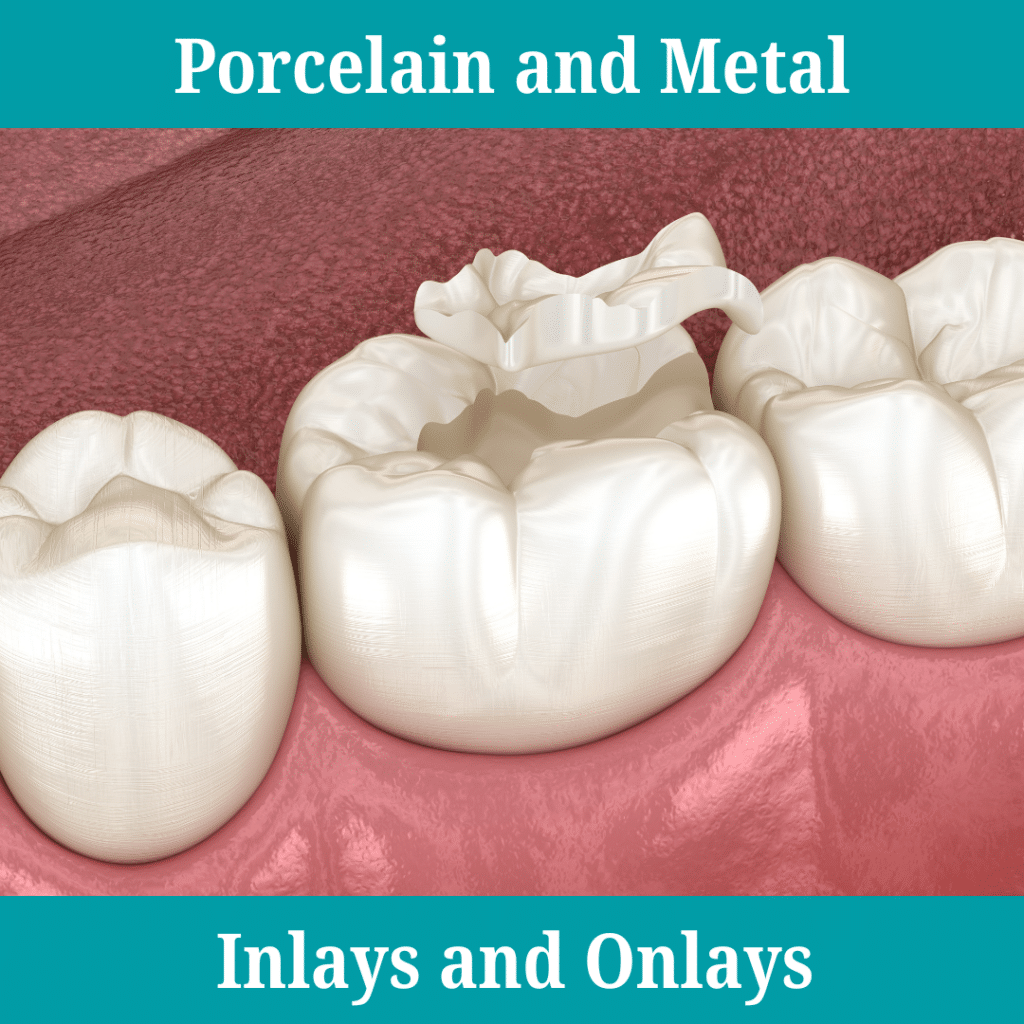
An inlay is used to repair the chewing surface of a tooth. It fits precisely between the “cusps” (the raised points on the top of your teeth).
Best for: Damage or decay confined to the central part of the tooth.
The Porcelain Advantage: Porcelain inlays are the top choice for visible teeth because they mimic the natural translucency of tooth enamel
What is a Dental Onlay?
An onlay is a more extensive restoration. Often called a “partial crown,” it covers one or more cusps and may extend over the sides of the tooth.
Best for: Substantial damage where a full crown is not yet necessary.
Strength & Support: Onlays reinforce weakened teeth, helping to prevent future fractures while maintaining a natural bite.
Porcelain vs. Metal: Comparing Materials
Choosing the right material depends on the tooth’s location and your personal habits (like teeth grinding).
| Feature | Porcelain Inlays/Onlays | Metal (Gold) Inlays/Onlays |
| Appearance | Natural, tooth-colored, and stain-resistant. | Distinctive metallic/gold look. |
| Durability | High; great for most standard restorations. | Extreme; can last several decades. |
| Best Location | Visible teeth (front and premolars). | Back molars where bite force is highest. |
| Biocompatibility | Excellent. | Excellent; gentle on opposing teeth. |
Why Choose Porcelain?
At our clinic, we typically recommend porcelain for its aesthetic superiority. It bonds directly to the tooth, strengthening the structure while remaining virtually invisible to the naked eye.
Why Choose Metal (Gold)?
Gold is the “gold standard” for longevity. For patients with bruxism (teeth grinding) or for teeth at the very back of the mouth, metal restorations are highly resistant to fracturing and provide a perfect seal against bacteria.
At our clinic, we typically recommend porcelain inlays and onlays for teeth that are visible when you smile. Porcelain provides a natural tooth-like appearance, is stain-resistant, and bonds well to the tooth for long-term durability.
However, in some cases, especially for back teeth or for patients who grind their teeth, a metal inlay or onlay may be the better option. Gold inlays and onlays are incredibly durable and long-lasting, often lasting decades with proper care. Gold restorations are biocompatible, gentle on opposing teeth, and highly resistant to fracture.
The choice between porcelain and gold inlays/onlays depends on several factors, including:
The location of the tooth
The extent of the damage
Aesthetic preferences
Budget and insurance coverage
Bite force or grinding habits
Our dental professionals will help you choose the best material for your unique needs.
Why Choose Inlays and Onlays?

Preserve more of the natural tooth structure
Stronger and more durable than regular fillings
Custom-made for a perfect fit
Less invasive than full crowns
Blends seamlessly with your natural smile (especially with porcelain)
Long-lasting with proper oral hygiene and regular dental checkups
In addition to their durability and aesthetics, inlays and onlays are also easier to maintain compared to full crowns. They are bonded securely to the tooth, strengthening it while also sealing out harmful bacteria that could lead to further decay.
Book Your Consultation Today
What is the primary difference between porcelain and metal inlays and onlays?
The main difference is the balance between aesthetics and durability. Porcelain is designed to mimic the look of a natural tooth, while metal (usually gold or base-metal alloys) is designed for maximum strength and longevity.
Which material looks better in the mouth?
Porcelain is the clear winner for aesthetics. It is custom-shaded to match your surrounding teeth and reflects light much like natural enamel, whereas metal is highly visible and metallic in color.
Which option is more durable over the long term?
Metal, particularly gold, is the most durable material in dentistry. It does not chip or crack and can easily last 20 years or more. Porcelain is strong but can be prone to fracturing if subjected to heavy grinding or trauma.
Will I have to lose more of my natural tooth for one or the other?
Usually, metal allows for more conservative treatment. Because metal is strong even when very thin, the dentist doesn’t have to remove as much of your healthy tooth. Porcelain requires a certain thickness to prevent it from breaking, which may require more drilling.
How do these materials affect the teeth they bite against?
Gold and other soft metal alloys have a wear rate very similar to natural enamel, making them gentle on the opposing teeth. Some older or lower-quality porcelains can be “abrasive” and may wear down the natural teeth they hit when you chew.
Is there a difference in how they are attached to the tooth?
Yes. Porcelain is chemically bonded to the tooth surface, which can actually help reinforce a weakened tooth structure. Metal restorations are typically cemented into place, relying more on a precise mechanical fit.
Can I use metal if I have allergies?
If you have a known nickel or “base metal” allergy, porcelain is the safer, biocompatible choice. However, high-noble gold alloys are also very well-tolerated by the body and rarely cause reactions.
Which material is better for back molars versus front teeth?
Porcelain is almost always chosen for teeth that show when you smile. Metal is often preferred for the very back molars because they endure the highest chewing forces and are hidden from view.
Is one more expensive than the other?
Both are high-end options. Porcelain costs are driven by the lab technology used to create the tooth-like appearance. The cost of metal restorations is often tied to the “spot price” of gold, which can make them more expensive depending on the current market.
Which one is "better" overall?
Neither is objectively better; it depends on your priorities. If you want a restoration that looks like a real tooth, porcelain is the best choice. If you want a restoration that you will likely never have to replace again, metal is the gold standard.
If you’ve been told you need a filling or a crown, ask us if inlays or onlays might be a better solution for you. Our dental team is here to guide you through the best treatment options for restoring your smile with strength and beauty.
Contact us today to learn more about porcelain and metal inlays and onlays, or click below to book your appointment online. We’re here to help you smile with confidence!